Quick answer
Clear water Apr–Aug; calmest seas May–Jul. Tran Phu suits families; Bai Dai and Doc Let (50 km north) are quieter. Hon Mun MPA is 20–30 min by boat; daily snorkel and dive trips. Group tours cost least; private or yacht add flexible stops. Use reef‑safe sunscreen; avoid touching coral.
Why this guide
About this guide
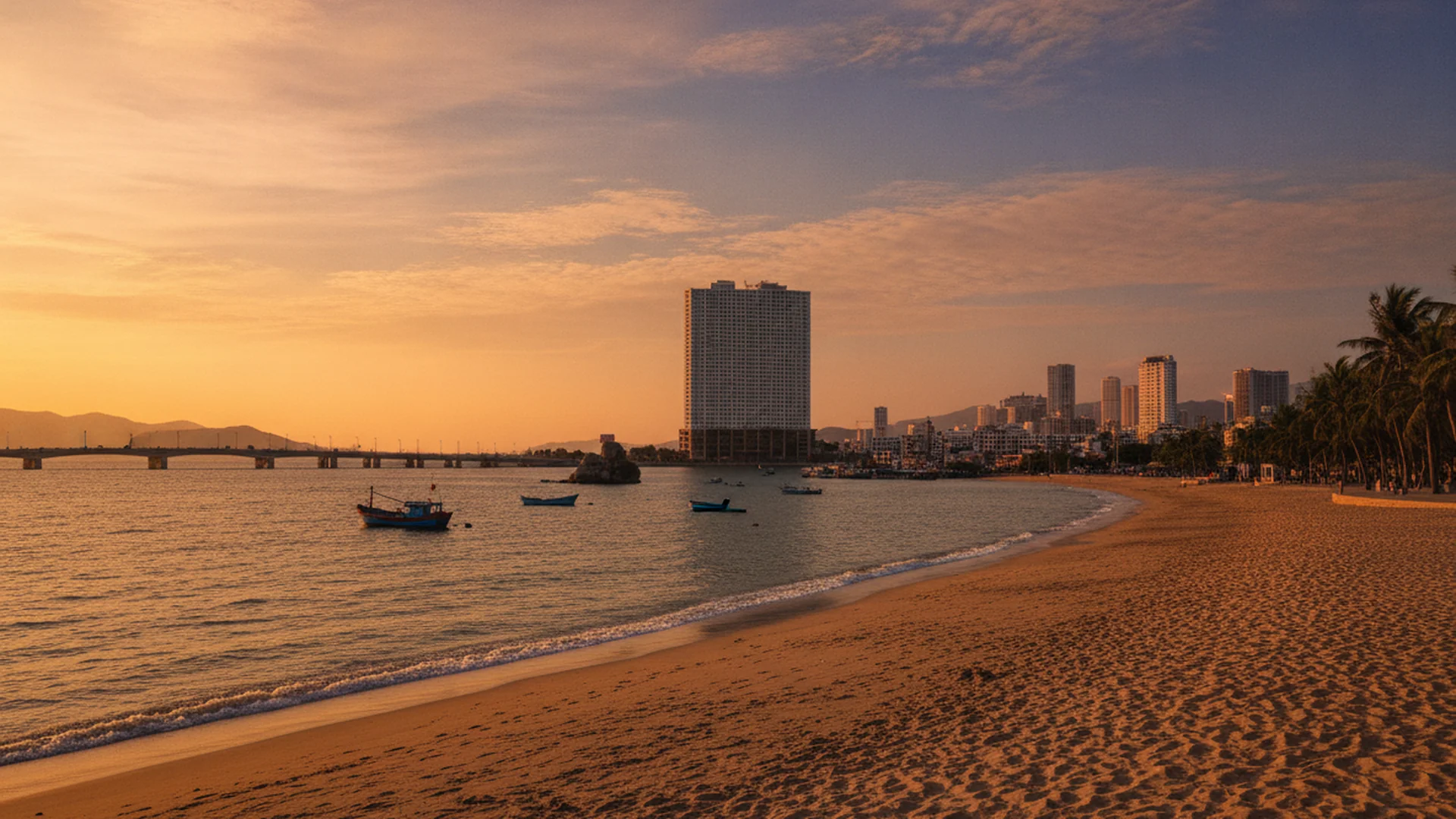
Nha Trang Bay covers 507 square kilometres and is scattered with 19 islands and islets along Vietnam's south-central coast, where it serves as the capital of Khánh Hòa Province. In 2003 the bay became the 29th member of the World's Most Beautiful Bays Club, placing it alongside Ha Long Bay and Sydney Harbour in that roster. Its protected geography and gentle currents produce calm, clear water conditions that hold across most of the year, making it practical for swimming, snorkeling, and watersports well outside the peak dry season of February to August.
The bay's most ecologically significant feature is Hon Mun Marine Protected Area, roughly 12 kilometres offshore and recognised as Vietnam's first marine protected area. Its reefs support over 350 coral species and more than 200 tropical fish species. Dive sites range from Hon Mun itself — with recreational dives reaching around 20 metres — to White Rock, a wall dive descending to 40 metres where stingrays and gorgonians are regularly sighted. PADI-certified centres run daily boat trips to Hon Mun and the surrounding islands, and visibility during the April-to-August peak season can extend to 30 metres.
Beyond the water, Nha Trang holds several cultural reference points. The Po Nagar Cham Towers, constructed by the Cham people between the 8th and 11th centuries, represent the city's most prominent historical site; the tallest tower reaches approximately 23 metres. Long Son Pagoda is marked by a 78-foot White Buddha statue on the hillside that is visible from much of the city. In the hills north of the centre, mud-bath and hot-spring facilities offer a wellness option distinct to the region. The city is also widely regarded as a centre for seafood along the Khánh Hòa coast, with lobster, squid, and shellfish available at markets, beachfront grills, and restaurants throughout the area.
Key facts & good to know
What are the primary seasons for diving and beach conditions?
The dry season runs January to August, with peak diving visibility of 10–15 metres and sea temperatures around 28°C from April to August. The rainy season, September to December, brings rough seas, visibility under 5 metres, and frequent port closures.
April through August delivers the most reliable underwater conditions: visibility reaches 10–15 metres at Hon Mun and surrounding sites, water temperature holds around 28°C, and seas remain calm enough for daily boat departures. This window suits both first-time snorkelers and divers completing Open Water courses, as surface intervals are comfortable and currents in the bay stay mild.
From September onward, conditions deteriorate progressively. October sees the heaviest rainfall and the bay can be closed to tourist boat traffic for days at a time. Visibility drops below 5 metres at most sites, and dive operators frequently suspend trips entirely through November and December. Jellyfish concentrations increase during the warmer summer months—typically June through August—and swimmers at Tran Phu Beach and Doc Let should check local conditions before entering the water.
Seasonal Conditions by Month — Nha Trang
| Period | Sea State | Visibility | Avg Sea Temp | Diving Suitability | Notes |
|---|---|---|---|---|---|
| January–March | Mostly calm, some chop | 5–10 m | 25–26°C | Moderate | Dry season begins; fewer crowds; cooler air (22–26°C) |
| April–August | Calm | 10–15 m | ~28°C | Peak | Best diving window; jellyfish possible June–Aug |
| September | Deteriorating | 5–8 m | 27–28°C | Low–Moderate | Rainy season onset; increasing swell |
| October–December | Rough; port closures likely | Under 5 m | 24–26°C | Poor | Heaviest rain in October; many operators suspend trips |
Visibility figures are approximate averages for Hon Mun MPA sites. Port closure decisions rest with local maritime authorities and individual operators.
Plan a Vietnam trip
Where to go, when to travel, and how a local ground operator builds a paced Vietnam itinerary.
Which beaches match specific itinerary requirements?
Tran Phu is the central city beach with steep drop-offs and watersports. Bai Dai in Cam Ranh is 30 minutes south with shallow, wide sand. Doc Let sits 40–45 km north with flat, calm water. Ninh Van Bay requires boat access.
Tran Phu Beach runs along the main city boulevard and is the most accessible option—walking distance from most city-centre hotels. The shoreline drops off relatively steeply, making it less suitable for young children wading, but parasailing and jet skiing are consistently available here. From Cam Ranh Airport (CXR), the city centre is approximately 35 km, taking 40–50 minutes by taxi or shuttle. Bai Dai, located within the Cam Ranh Peninsula about 30 minutes south of the airport, offers wide, shallow water and is significantly less developed than the city beach.
Doc Let, roughly 40–45 km north of the city, features long stretches of pale sand and flat, shallow water that remains calm for most of the year—well suited to families and those wanting quieter surroundings. Coral reefs are accessible by snorkeling directly from the shore. During November through March, Bai Dai picks up consistent onshore wind that attracts kitesurfers, while Doc Let and Tran Phu remain the more practical choices for calm swimming during that window. Ninh Van Bay, accessible only by boat from the northern shore, is separated from the road network entirely and is primarily associated with high-end resort accommodation.
Beach Comparison — Distance, Access, and Conditions
| Beach | Distance from CXR | Travel Time from CXR | Water Depth Profile | Wind Exposure (Nov–Mar) | Primary Activities |
|---|---|---|---|---|---|
| Tran Phu (City Beach) | ~35 km north | 40–50 min | Steeper drop-off | Moderate | Watersports, parasailing, jet skiing |
| Bai Dai (Cam Ranh) | ~10 km north | ~30 min | Shallow, wide | High — surfing/kite conditions | Swimming, kitesurfing (Nov–Mar) |
| Doc Let | ~75 km north | ~60–75 min | Flat, very shallow | Low–Moderate | Swimming, snorkeling, families |
| Ninh Van Bay | ~45 km north (road) + boat | 60+ min + boat transfer | Varied | Low (sheltered) | Resort stays, kayaking |
Travel times are estimates from Cam Ranh Airport (CXR) by private car under normal traffic. Doc Let distance cited as ~40 km from city centre; add ~35 km airport-to-city leg.
What should divers expect from local scuba sites and certification courses?
Nha Trang suits Open Water training and recreational reef diving rather than large pelagic encounters. Hon Mun MPA sites reach 6–20 metres with mild currents. Open Water courses run 3–4 days and cost approximately $250–$350 USD.
Hon Mun Marine Protected Area, roughly 12 km offshore, is Vietnam's first designated MPA and hosts over 350 coral species and 200 tropical fish species. Recreational dive depths at most MPA sites sit between 6 and 18 metres, with gentle currents that suit beginners. Madonna Rock and Moray Beach—two frequently visited sites within the MPA—involve wall sections and rubble slopes rather than dramatic drop-offs, and the marine life consists primarily of reef fish, moray eels, and invertebrates. White Rock, a more advanced site, descends to 40 metres via a wall dive where stingrays and gorgonians are regularly encountered.
PADI-certified centres operate daily boat trips to Hon Mun and surrounding islands. An Open Water certification course typically takes 3–4 days and costs approximately $250–$350 USD, covering pool or shallow-water confined dives followed by four open-water checkout dives. Sea walking—a surface-supply helmet system that does not require certification—is available at Hon Tam Island and offers a lower-commitment alternative for non-divers. Snorkeling from group tour boats is the most common activity at the MPA and requires no prior experience.
What are the differences between the main islands for snorkeling and day trips?
Hon Mun is the primary reef snorkeling destination as Vietnam's first MPA. Hon Tam offers mud baths and sea walking. Hon Tre is the largest island, home to VinWonders and a cable car. Whale Island, two hours north, is suited to macro diving.
Hon Mun sits approximately 12 km from the mainland and is the focal point for reef snorkeling, with over 350 coral species recorded within the protected area. An MPA entry fee of approximately 22,000 VND applies. Boat travel from Vinh Truong port—which has largely replaced Cau Da as the main tourist departure point—takes around 40 minutes by standard wooden group boat. Morning departures, typically before 8:30 a.m., reduce overlap with the large 50–80 passenger tour flotillas that dominate midday conditions at the main snorkel buoys.
Hon Tam, 7 km southeast of the city, covers over 100 hectares and is oriented toward day-resort activities: mud baths, flyboarding, scuba diving, and sea walking are all available. Hon Tre is the largest island in the bay and is developed around the VinWonders theme park complex, accessed via a cable car from the mainland. Whale Island, approximately two hours north by boat, sits outside the bay and is known for calmer macro-life encounters rather than large reef structures—best suited for dedicated divers rather than casual snorkelers on a standard day trip.
Island Comparison — Nha Trang Bay Day Trips
| Island | Distance from Port | Boat Time (Vinh Truong) | MPA Fee | Key Activities | Crowd Level (Morning) |
|---|---|---|---|---|---|
| Hon Mun | ~12 km offshore | ~40 min (group boat) | ~22,000 VND | Reef snorkeling, scuba diving | High — peak tours 9–11 a.m. |
| Hon Tam | ~7 km southeast | ~20–25 min | None listed | Mud baths, sea walking, flyboarding | Moderate |
| Hon Tre | ~5 km from mainland | ~15–20 min (or cable car) | VinWonders entry separate | Theme park, beach, cable car | High (weekends) |
| Whale Island (Hon Ong) | ~2 hrs north by boat | ~2 hours | None listed | Macro diving, snorkeling, quiet beach | Low |
Boat times are approximate for standard wooden group boats (~8 knots). Private speedboats reduce transit times by roughly half. MPA fee subject to change; confirm on departure.
What are the logistics for airport transfers and safe boat charters?
Cam Ranh Airport is 35 km from the city centre, taking 40–50 minutes. Group wooden boats carry 50–80 passengers at 8 knots; private speedboats carry 10–15 at 20+ knots. Vinh Truong port now handles most tourist departures.
Cam Ranh Airport (CXR) is located on the Cam Ranh Peninsula, 35 km south of the city centre. Fixed-rate taxis and shuttle minibuses cover the route in 40–50 minutes under normal conditions; some resort hotels operate direct transfers. For island access, Vinh Truong port on the southern edge of the city has largely replaced Cau Da pier as the main departure hub for tourist boats, and most dive operators and island tour companies now list Vinh Truong as their departure point.
Standard group island-hopping boats are wooden vessels carrying 50–80 passengers at approximately 8 knots, covering the journey to Hon Mun in around 40 minutes. Private speedboats typically take 10–15 passengers and travel at 20 knots or above, reducing transit time to Hon Mun to roughly 20 minutes and offering more flexibility in departure timing. When chartering a private boat, confirm in advance that the operator provides fitted life jackets for all passengers and conducts a safety briefing before departure—this is a legal requirement but inconsistently enforced at smaller operators.
Fitted life jackets and a pre-departure safety briefing are legally required on all tourist charter vessels in Vietnamese waters but enforcement varies. Before boarding any private speedboat or group tour boat, verify that adult-sized life jackets are accessible for every passenger—not stowed in lockers. During October–December, maritime authorities may issue bay-closure notices with short notice; confirm vessel departure status with your operator on the morning of travel, not the evening before. Avoid operators who cannot provide vessel registration documentation on request.
Browse Vietnam tours
Ready-made and tailor-made tours run by our own ground operators — private vehicles, certified guides, net rates.
Building a vietnam itinerary for your clients?
Send us your dates and pace — we return a realistic, booked-and-paced plan with net rates, not a generic template.
Want this tailored to your dates?
We run these routes ourselves. Send your dates, group size and pace and our Hanoi team will build a custom version — with real prices, not estimates.
Frequently asked questions
People also ask
Verified sources
- ATL DMC booking log · 12,000+ trips since 2011
- Vietnam Tourism Board – 7 Reasons to Visit Nha Trang · https://vietnam.travel/things-to-do/7-reasons-visit-nha-trang
- Vietnam Tourism Board – Nha Trang Destination Page · https://vietnam.travel/places-to-go/central-vietnam/nha-trang
- PADI – Diving in Nha Trang · https://www.padi.com/diving-in/nha-trang/
- Vietnam Airlines – Top Beaches in Nha Trang · https://www.vietnamairlines.com/us/en/plan-book/travel/travel-guide/beach-nha-trang
- Underwater Asia – Nha Trang Diving Guide · https://underwaterasia.info/vietnam/nha-trang-diving
- VietnamNet – Nha Trang Bay Protection & Sustainable Tourism · https://vietnamnet.vn/en/nha-trang-bay-needs-protection-for-sustainable-tourism-development-2269417.html
- Vietnam Tourism Board – Ideal Scuba Diving Places in Vietnam · https://vietnam.travel/things-to-do/ideal-places-scuba-diving-vietnam
Turn this guide into a trip
The products we actually run for this route — book direct, no OTA markup.
Plan your custom trip with Phuong Le
Phuong Le
“Tell us your dates and pace — we'll turn this guide into a realistic, booked-and-paced trip for you, not a generic template.”
Plan my trip with our team →About the authors
Phuong Le · primary author
Specialty: Hanoi · Halong Bay · Vietnam itineraries.
Cross-category lattice
Plan your trip
Practical
Related travel guides
1× per month · pillar guides + new itineraries
Get our newest pillar guides + quarterly itinerary updates delivered. No spam, no promotions, just travel-guide content. Unsubscribe anytime.